
Mapping the Global CBD Landscape
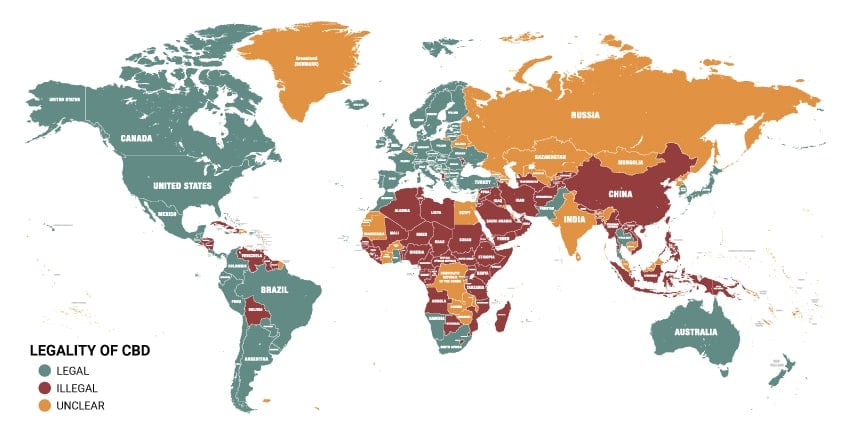
The international CBD market is anything but uniform. It's a patchwork of regulations, ranging from complete legality to outright prohibition. Countries like Uruguay and Switzerland have embraced CBD with relatively open frameworks, while others, such as many in the Middle East, maintain strict restrictions. Even within Europe, you'll find significant differences – Germany has a more developed market than, say, Poland. This complexity is a major challenge for both consumers and businesses.
The 2018 US Farm Bill played a significant role in this global shift, legalizing hemp-derived CBD at the federal level. This spurred growth in the US market and also influenced other countries to re-evaluate their own regulations. However, the bill didn't address international shipping, creating ongoing issues with customs and border control. What's legal to sell in the US isn't necessarily legal to import into another country, and that's where things get tricky.
It's not just about legality, either. Regulations around THC content, product testing, and labeling vary widely. Some countries require extremely low THC levels (below 0.2%), while others allow higher amounts. This impacts the types of CBD products that can be sold and the quality standards that must be met. Navigating these differences requires careful research and a good understanding of local laws. The situation is constantly evolving, so staying informed is crucial.
Navigating US Customs & CBD
The United States is a massive CBD market, but importing CBD products can be fraught with difficulty. U.S. Customs and Border Protection (CBP) maintains a firm stance, and the rules, as outlined on cbp.gov, are surprisingly strict. Even if a CBD product is legal in the country of origin, it doesn’t guarantee smooth passage through US customs. The CBP focuses heavily on ensuring compliance with US federal law.
Generally, CBD products derived from hemp with less than 0.3% THC are permissible, but documentation is key. You’ll need to demonstrate that the product meets this requirement, typically through a Certificate of Analysis (COA) from a third-party lab. However, the CBP has broad discretion, and even with valid documentation, products can be seized. They often err on the side of caution, especially if there’s any ambiguity or suspicion.
The FDA’s position further complicates matters. While the FDA hasn’t approved CBD as a dietary supplement or food additive (with limited exceptions for certain medications), it regulates the marketing and labeling of CBD products. Importing products that violate FDA regulations – such as unsubstantiated health claims – can lead to seizure or refusal of entry. The legal grey areas are substantial, and attempting to import CBD without thorough research could have serious consequences.
Key International CBD Markets: 2026 Forecast
Canada remains a strong and established CBD market, benefiting from its early adoption of cannabis legalization. The market is driven by a relatively high level of consumer acceptance and a well-developed retail infrastructure. Popular product categories include CBD oils, edibles, and topicals. However, growth is somewhat constrained by strict regulations and a competitive market.
The UK is another significant player, but with a different dynamic. Regulations are more conservative than in Canada, and the market is largely focused on CBD oils and supplements. Consumer awareness is growing, but there’s still some stigma surrounding CBD. I anticipate continued growth, but at a more moderate pace than in other markets. Germany is quickly becoming a leading market, with a focus on pharmaceutical-grade CBD products and a growing number of specialized retailers.
Australia's CBD market is still relatively young, but it's showing strong potential. Initially, CBD was only available through prescription, but regulations have eased, allowing for over-the-counter sales of low-dose CBD products. This has opened up the market to a wider range of consumers. While predicting exact growth percentages is difficult, I believe these four countries will continue to be major drivers of the global CBD market in the coming years. The demand for alternative wellness solutions is a consistent factor.
- Canada: Mature market, high acceptance, strict regulations.
- UK: Growing awareness, conservative regulations, focus on oils & supplements.
- Germany: Pharmaceutical focus, expanding retail network.
- Australia: Emerging market, easing regulations, increasing consumer access.
Comparative Analysis of Key Global CBD Markets - 2026 Outlook
| Market | Market Size | Regulatory Environment | Popular Products | Growth Potential | Key Challenges |
|---|---|---|---|---|---|
| Canada | Large | Moderate | Oil, Edibles, Topicals, Vapes | Medium | Banking Restrictions, Provincial Variations in Regulation |
| United Kingdom | Medium | Moderate | Oil, Edibles, Topicals | Medium | Novel Food Regulations, Marketing Restrictions |
| Germany | Medium | Strict | Oil, Flower (limited), Topicals | High | Complex Import/Export Regulations, Limited Retail Access |
| Australia | Small | Strict | Oil (prescription-based), Limited Edibles | High | Prescription Requirements, Limited Cultivation Licenses, Supply Chain Issues |
| United States | Large | Varied (State-Level) | Oil, Flower, Edibles, Topicals | High | Federal/State Discrepancies, Banking Challenges, Marketing Restrictions |
| Switzerland | Small | Relaxed | Oil, Flower, Edibles | Medium | Maintaining Quality Control, Potential for EU Harmonization |
| Netherlands | Small | Relaxed | Oil, Flower | Medium | Grey Area Regulation, Tourism Dependency |
| Japan | Small | Strict | Oil (limited), Topicals | Low | Strict Import Regulations, Cultural Acceptance |
Illustrative comparison based on the article research brief. Verify current pricing, limits, and product details in the official docs before relying on it.
Cross-Border Shopping: Risks and Realities
The allure of lower prices or access to specific CBD strains often leads consumers to consider ordering products from overseas. However, this practice is fraught with risks. The most obvious is the potential for seizure by customs officials. As we discussed earlier, importing CBD is often illegal or heavily restricted, and even if the product meets legal requirements, it can still be confiscated.
Beyond seizure, there are legal repercussions to consider. Depending on the country, importing CBD could result in fines or even criminal charges. Quality control is another major concern. Products purchased from unregulated sources may not contain the advertised amount of CBD, or they could be contaminated with harmful substances. It’s difficult to verify the authenticity and purity of CBD products when sourcing them internationally.
If you choose to import CBD despite these risks, there are steps you can take to minimize them. Research the regulations of both the sending and receiving countries thoroughly. Choose reputable vendors with transparent sourcing practices and third-party lab testing. Keep detailed records of your purchase and any documentation you receive. But ultimately, the safest option is to purchase CBD products from domestic sources that comply with local laws.
MindCBD’s Global Store Directory: A Deep Dive
MindCBD aims to simplify the process of finding reliable CBD retailers, both domestically and internationally. Our global store directory is designed to be a comprehensive resource for anyone looking to purchase CBD products. We list worldwide CBD shops, providing detailed information about each business, including its location, contact information, product selection, and customer reviews.
What sets MindCBD apart is our commitment to verification. We don’t just list any store that applies. We actively work to verify the legitimacy of the businesses listed in our directory. This includes checking for valid licenses, reviewing product testing reports, and monitoring customer feedback. We want to ensure that our users can trust the information they find on our platform. We are building a reliable CBD directory.
The directory features powerful search filters that allow you to narrow your search based on location, product type, and other criteria. You can also view store maps and read user reviews to get a better sense of each retailer. Our goal is to empower consumers to make informed decisions and find the best CBD products for their needs. The international CBD market is complex, and MindCBD is here to help navigate it.
Spotlight on Emerging CBD Markets
While Canada, the UK, Germany, and Australia are established markets, several other countries are poised for significant growth in the CBD sector. Brazil, for example, has seen a surge in interest in CBD, driven by a growing awareness of its potential health benefits. However, regulations are still evolving, and the market is largely unregulated. Mexico is also showing promise, with a recent Supreme Court ruling paving the way for legal CBD sales.
South Africa is another market to watch, with a growing number of CBD retailers and a rising demand for CBD products. Regulatory hurdles remain, but the market is expected to expand rapidly in the coming years. Thailand recently decriminalized CBD, creating a new opportunity for businesses and consumers. This rapid change makes it a dynamic, though somewhat unpredictable, market.
These emerging markets present both challenges and opportunities. Regulatory uncertainty, limited consumer awareness, and a lack of established infrastructure are all potential obstacles. However, the potential for growth is enormous. Businesses that are willing to navigate these challenges could reap significant rewards.
Product Verification & Quality Control
When sourcing CBD products internationally, quality control is paramount. It’s easy to be misled by flashy marketing or low prices, but it’s crucial to ensure that you’re getting a safe and effective product. Third-party lab testing is the gold standard for verifying CBD content and purity. Reputable manufacturers will voluntarily submit their products to independent labs for analysis.
A Certificate of Analysis (COA) is the document that summarizes the lab’s findings. It should include information about the CBD content, THC content, and the presence of any contaminants, such as pesticides, heavy metals, or solvents. Learning to interpret a COA is essential. Look for a clear indication of the CBD and THC levels, as well as confirmation that the product is free of harmful contaminants. Red flags include missing COAs, incomplete testing, or results that don’t match the product label.
Finding reputable testing labs can be challenging, but resources are available online. The American Herbal Pharmacopoeia (AHP) and the US Hemp Authority are good places to start. Remember that even with a COA, there’s no guarantee of quality. It’s important to choose brands that are transparent about their sourcing and manufacturing processes and prioritize quality over price.
- Third-party lab testing: Essential for verifying CBD content and purity.
- COA (Certificate of Analysis): Summarizes lab findings, including CBD/THC levels and contaminant testing.
- Reputable testing labs: American Herbal Pharmacopoeia (AHP), US Hemp Authority.
Future Trends: What to Watch in 2026
Increased regulation is almost certain. As the CBD market matures, governments around the world will likely implement more comprehensive regulations to ensure product safety and consumer protection. This could include stricter testing requirements, labeling standards, and restrictions on marketing claims. I also anticipate greater consumer awareness and demand for transparency.
The rise of novel cannabinoids, such as HHC and Delta-8, is another trend to watch. These compounds offer different effects than traditional CBD and are gaining popularity among some consumers. However, their legal status is often unclear, and their long-term effects are still unknown. The integration of CBD into mainstream wellness products is also likely to continue, with CBD-infused beverages, cosmetics, and other products becoming more widely available.
Ultimately, the global CBD market is dynamic and unpredictable. While it’s impossible to predict the future with certainty, I believe that these trends will shape the industry in the years to come. Staying informed, doing your research, and choosing reputable brands will be key to navigating this evolving landscape.

No comments yet. Be the first to share your thoughts!